
Most investors are familiar with the basic principles of diversification. Own a mix of investments, keep a long-term perspective, and avoid overexposure to any one area of the market. That approach works well for many people, but for high-income investors with concentrated stock positions or large taxable portfolios, basic diversification may not be enough, particularly when taxes and concentration risk start to become a bigger part of the conversation.
This is where a 130/30 strategy comes into play.
A 130/30 strategy is not about taking unnecessary risk in pursuit of higher returns. It is about creating more flexibility inside the portfolio by broadening exposure, managing concentrated positions more strategically, and opening the door to more tax-aware portfolio management over time.

What Is a 130/30 Strategy?
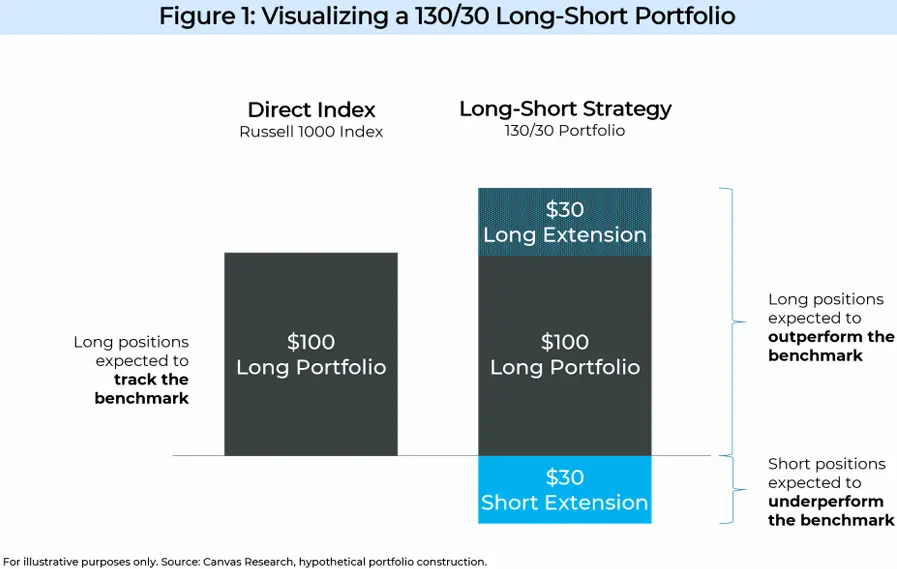
A 130/30 strategy is an advanced investment approach designed to help investors reduce the risk of holding too much in one stock while also improving tax flexibility. In simple terms, the portfolio is 130% long and 30% short. That means it owns a broader mix of investments on the long side while using a smaller short position as part of the strategy. For the right investor, this can be a smart way to reduce reliance on a single holding, improve diversification, and create more opportunities for tax-loss harvesting over time. Instead of feeling stuck with a highly appreciated position and the tax consequences that may come with selling it, a 130/30 strategy can offer a more flexible and thoughtful path forward.
Why Investors Use It
Many investors accumulate substantial wealth through a single stock, from founding a company, working at a successful business, or holding an investment that has appreciated significantly over time. In other cases, wealth may come from the sale of real estate or another highly appreciated asset. While that can be a great outcome, it can also create a meaningful planning challenge.
When a large portion of wealth is tied to one company, one asset, or one concentrated source of gain, the investor may face both elevated risk and a more complex tax situation. In the case of a concentrated stock position, that risk can show up through weak earnings, a leadership change, regulatory pressure, or an industry downturn.
A 130/30 strategy can help address that issue by expanding the portfolio into a broader mix of holdings. That can reduce concentration risk and improve diversification without forcing an all-at-once sale. Because the strategy often includes more individual positions, it may also create more opportunities to harvest losses and use them to offset gains. The result can be a portfolio that is not only more diversified, but also more tax-aware.
The Tax Benefit Over Time
Successful investing is not only about what you buy. It is also about how you reposition, access, and eventually transition wealth in the most tax-efficient way possible. That is one reason a long-short strategy can be so valuable.
Traditional direct indexing can be a useful tax tool, but over time it often becomes less effective at producing new losses to harvest because many of the easiest opportunities may already have been used. A long-short strategy can help extend that window by continuing to create opportunities for tax-loss harvesting over a longer period. This can be especially helpful for investors with concentrated stock positions, highly appreciated assets, or large taxable portfolios. Ongoing tax-loss harvesting may help offset gains, reduce the drag taxes can have on long-term returns, and create more flexibility when making future portfolio decisions.
In other words, this is not just about growing wealth. It is about keeping more of it.

A Useful Strategy After Selling a Business
One of the most compelling times to consider this type of strategy is after the sale of a business. A significant liquidity event can create tremendous opportunity, but it can also create a meaningful tax burden. For business owners navigating that kind of transition, a long-short strategy may offer a more thoughtful way to manage the tax impact.
In some cases, the portfolio’s long and short exposure can be increased even further, up to 300% long and 200% short, to create additional tax-loss harvesting opportunities. By increasing leverage within the portfolio, an investor may be able to harvest more losses and use them to help offset gains from the transaction. For someone facing a large tax bill after years of building a business, that added flexibility can be incredibly valuable.
The tradeoff is that this is not a quick fix. A strategy like this often takes time and may require a few years to gradually unwind, depending on the amount of leverage used. However, that does not necessarily mean the investor loses access to capital in the meantime. In many cases, the portfolio can still provide liquidity through borrowing, allowing the investor to cover day-to-day expenses while the strategy continues working in the background.
Who This Strategy May Be Best For
A 130/30 strategy is generally best suited for investors with meaningful taxable assets who are looking for a more advanced approach to diversification and tax management. In many cases, minimums for this type of strategy start at $500,000, making it more appropriate for higher-net-worth investors, business owners, and individuals with concentrated positions or large embedded gains.
Because of its complexity, this is not a one-size-fits-all solution. It requires thoughtful portfolio design, risk management, tax coordination, and ongoing oversight. But for the right person, it can be a highly effective way to diversify intelligently, manage taxes proactively, and create more flexibility over time.
Final Thoughts
If you have a concentrated stock position, a highly appreciated portfolio, or you are preparing for or have recently completed the sale of a business, the question is not simply whether you should diversify. The more important question is how to do it in a way that is thoughtful, tax-aware, and aligned with your long-term goals.
That is where strategy matters. The right approach can potentially reduce concentration risk, improve after-tax outcomes, and help you make smarter decisions with significant wealth.
At Emory Wealth, we help clients evaluate advanced planning strategies like this in the context of the full picture, including investment management, tax planning, liquidity needs, and long-term goals. A 130/30 strategy is not right for everyone, but in the right situation, it can be a powerful tool.
If you’d like to explore whether a 130/30 strategy makes sense for your situation, you can schedule time directly on my calendar or email me at michael@emorywealth.com. I’d be happy to walk through the trade-offs and help determine whether this strategy fits within your broader financial goals.